The short answer
10,000 steps a day is a fine goal — but the number itself isn't magic. The real win isn't hitting exactly ten thousand; it's going from barely moving to moving consistently. If you currently average 3,000 steps, getting to 7,000 will do far more for you than stressing over the last 3,000 to reach some round number.
That said, having a daily target works. It turns "I should move more" into something measurable. So keep the goal — just understand what it actually does and doesn't mean.
Where did 10,000 come from?
Here's a fun bit of honesty: the 10,000-step rule started as marketing. In the 1960s, a Japanese company selling pedometers named their device "manpo-kei" — literally "the 10,000-step meter." Ten thousand sounded ambitious and memorable, so it stuck. It wasn't based on a study.
Decades later, researchers actually looked at the question, and the findings are reassuring: health benefits kick in well below 10,000 steps. A large 2023 meta-analysis of more than 226,000 adults found the steepest risk reductions came from moving out of the least-active group, with smaller additional gains at higher step counts (European Journal of Preventive Cardiology). Translation: 10,000 is a good target, but 7,000 done daily beats 10,000 done twice a week.
What walking actually does for you
Walking is the most underrated exercise there is, mostly because it doesn't feel like exercise. Here's what a regular walking habit actually delivers:
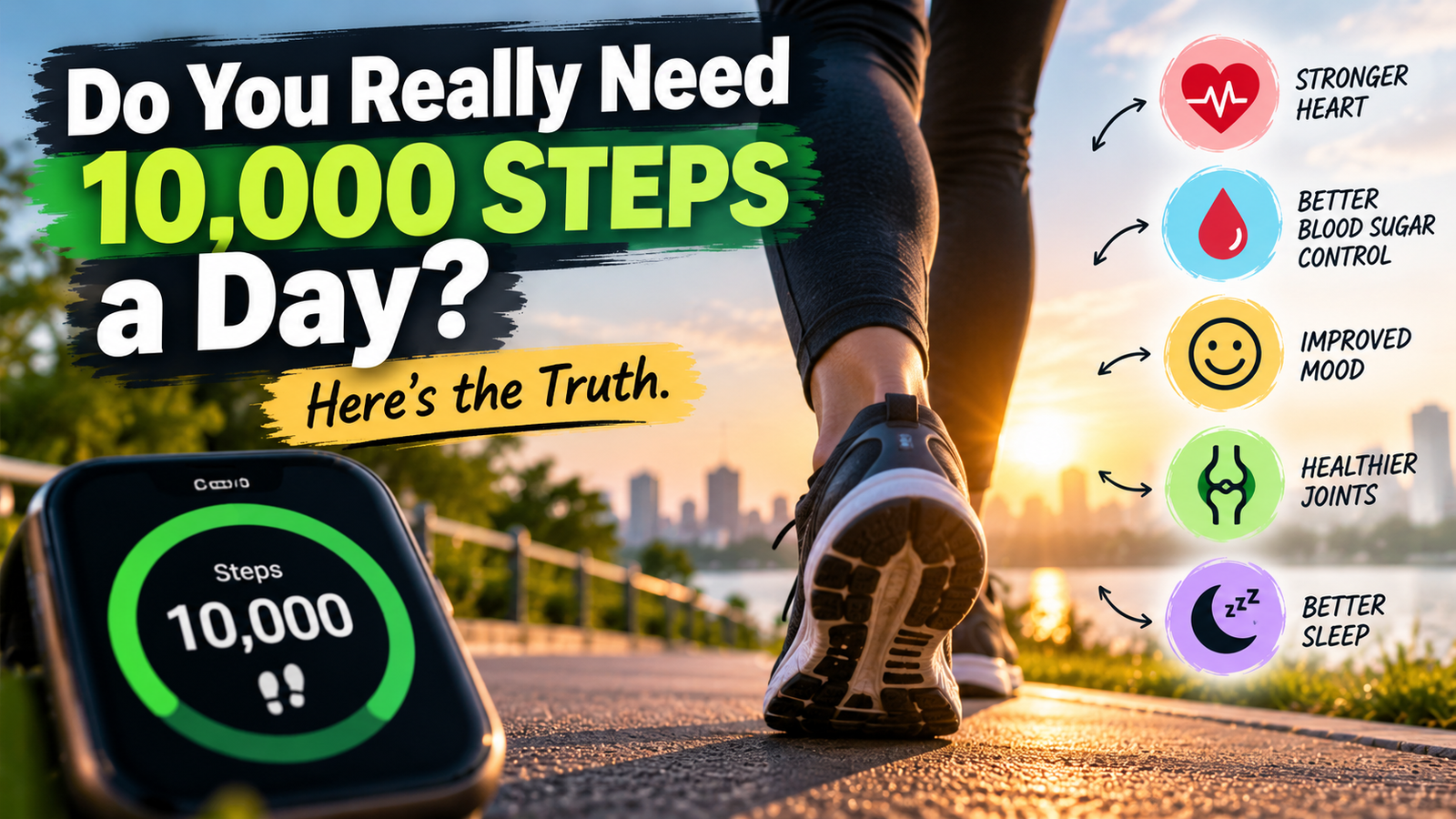
- Heart and circulation. Brisk walking counts as moderate aerobic exercise — the kind heart-health guidelines are built around. Your resting heart rate drops, circulation improves.
- Blood sugar control. A 10–15 minute walk after meals may help blunt the blood-sugar spike from eating. This is one of the simplest high-impact habits in all of fitness.
- Mood and stress. Walking — especially outdoors — is one of the most reliable short-term mood lifters we know of. Anxious afternoon? Walk around the block before you reach for your phone.
- Joints and back. Gentle, regular movement lubricates joints and strengthens the muscles that support your spine. Your back prefers walking to your chair.
- Sleep. People who walk regularly tend to fall asleep faster. Morning or afternoon walks seem to help most; an intense late-night session can do the opposite.
None of this requires speed. A comfortable, purposeful pace — where you can talk but would rather not sing — is the sweet spot.
So how many steps do you actually need?
Honest answer: it depends on where you're starting. The research pattern is consistent — the biggest health gains come from leaving the sedentary zone. Going from 2,000 to 6,000 daily steps matters enormously. Going from 8,000 to 12,000 matters much less.
Practical targets:
- Under 5,000/day now? Aim for 6,000–7,000. That's life-changing territory.
- Around 7,000? You're already in the zone where most of the benefit lives. Push toward 8,000–10,000 if you enjoy it.
- Already at 10,000+? Great — maintain it, and consider adding intensity (hills, faster pace) or strength work rather than chasing 15,000.
Your phone already counts steps — iPhones do it in the Health app, Android phones in Google Fit or Samsung Health. Check your average over the last week before setting a target. Base the goal on your reality, not a poster.
Simple ways to actually hit your number
You don't need an extra hour. You need to steal minutes back from your day:
- Walk after meals. Ten minutes after lunch and dinner is 20+ minutes without scheduling anything.
- Take your calls walking. Phone meetings are made for pacing — nobody can tell.
- Park farther away. The back of the lot is free exercise with zero time cost.
- One stop early. If you take transit, get off one stop before yours and walk the rest.
- The evening loop. A fixed 15-minute route around your neighborhood, same time daily. Boring is the point — routines survive, adventures don't.
Make it stick
- Shoes beat gear. You don't need much, but worn-out flat shoes will punish your feet. Any comfortable walking shoe with cushioning works.
- Stack it on an existing habit. "After I finish lunch, I walk for ten minutes" beats "I'll walk more" every time.
- Track it loosely. Glance at your step count in the evening, not obsessively through the day. Weekly averages matter more than any single day.
- Bad weather plan. Decide in advance: mall laps, treadmill, marching in place during a show. The days you skip are the days with no plan B.
What walking won't do
Honesty matters here too. Walking won't build much muscle — after a couple of months, add two days of basic strength work (bodyweight squats, push-ups) or the gains stall. And walking can't fully offset a poor diet on its own; it helps, but nutrition does the heavy lifting on weight. Think of walking as the foundation, not the whole house.
The bottom line
Don't worship the number — respect the habit. Check your current average, add 2,000–3,000 steps to it, and hold that for a month. The 10,000-step target is a fine destination, but the road getting there is where all the benefit lives.
This article is for general information only and isn't medical advice. If you have a heart condition, joint problems, or any health concern, check with a qualified healthcare professional before starting a new activity routine.