The Short Answer
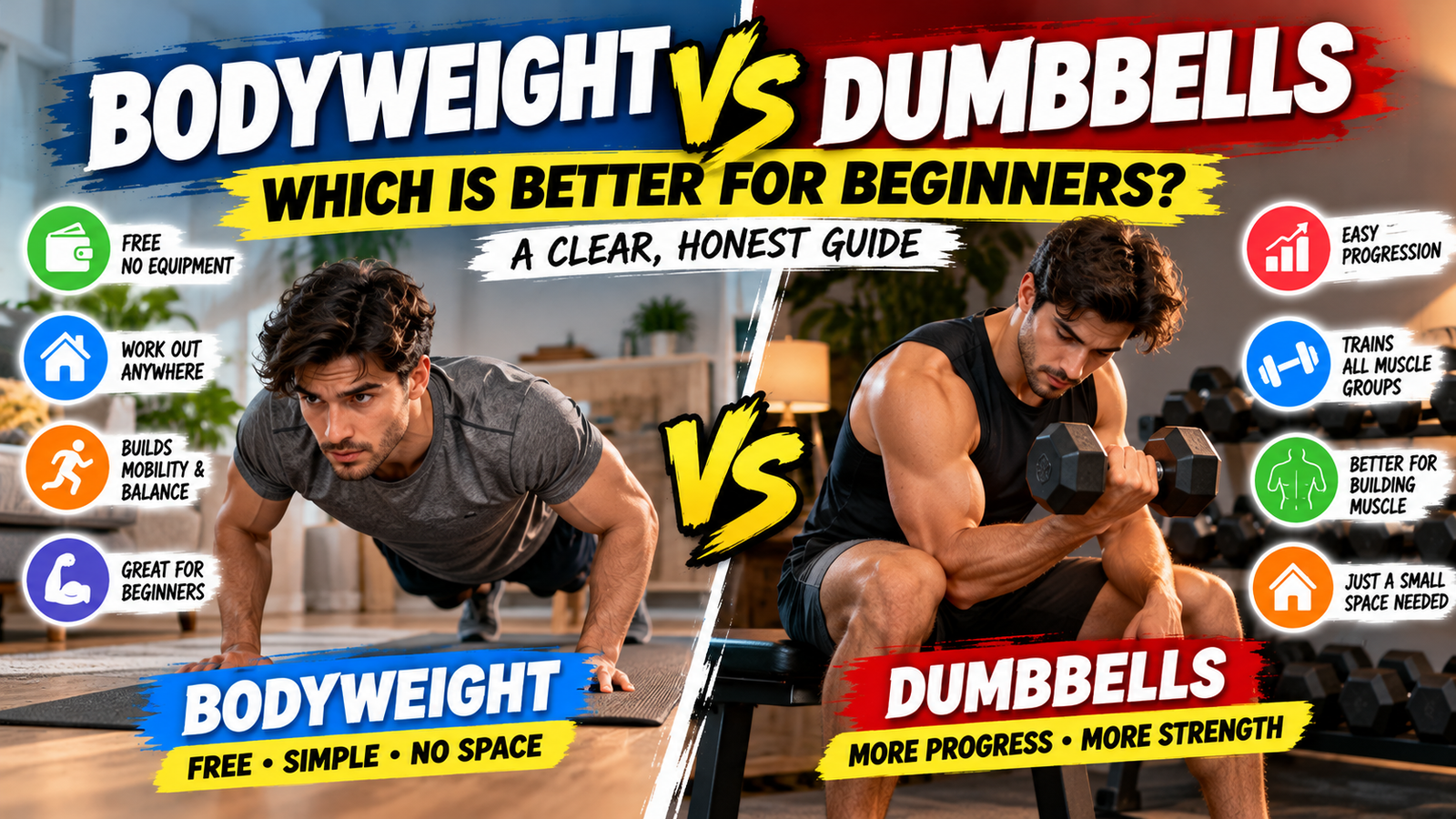
If you're starting from zero, either option will work — the honest difference is convenience, not magic. Bodyweight training is free, needs no space, and teaches you to control your own body, but it gets hard to progress past a certain point, especially for pulling muscles and legs. Dumbbells cost some money and take a corner of a room, but they make progressive overload simple: when something gets easy, you pick up the heavier pair. If you want the path of least resistance to keep going, pick the one that fits your living situation. Consistency beats equipment every time.
What Bodyweight Training Gets Right
Push-ups, squats, lunges, and planks are real exercises, not placeholders. A well-done push-up works your chest, shoulders, triceps, and core at once, and most beginners can't do five clean ones on day one. Bodyweight training teaches coordination and joint control that carry over to everything else. There's no setup time — you can work out in pajamas in a six-by-six-foot patch of floor, which means fewer excuses. And because you're moving your whole body, you naturally build mobility and balance alongside strength. For the first few months, the challenge is plenty.
Where Bodyweight Gets Harder
The catch is loading. Once bodyweight squats feel easy, the next step is a single-leg squat or a jump squat — a big jump in difficulty with no middle ground. Pulling muscles are the trickiest: without a bar to hang from, your back and biceps get the least work, and a wobbly doorway pull-up bar isn't for everyone. You can slow reps down, add pauses, or do more reps, but past a point those tricks stop producing much new strength. Bodyweight is honest work; it's just hard to dial up in small, controlled steps.
What Dumbbells Get Right
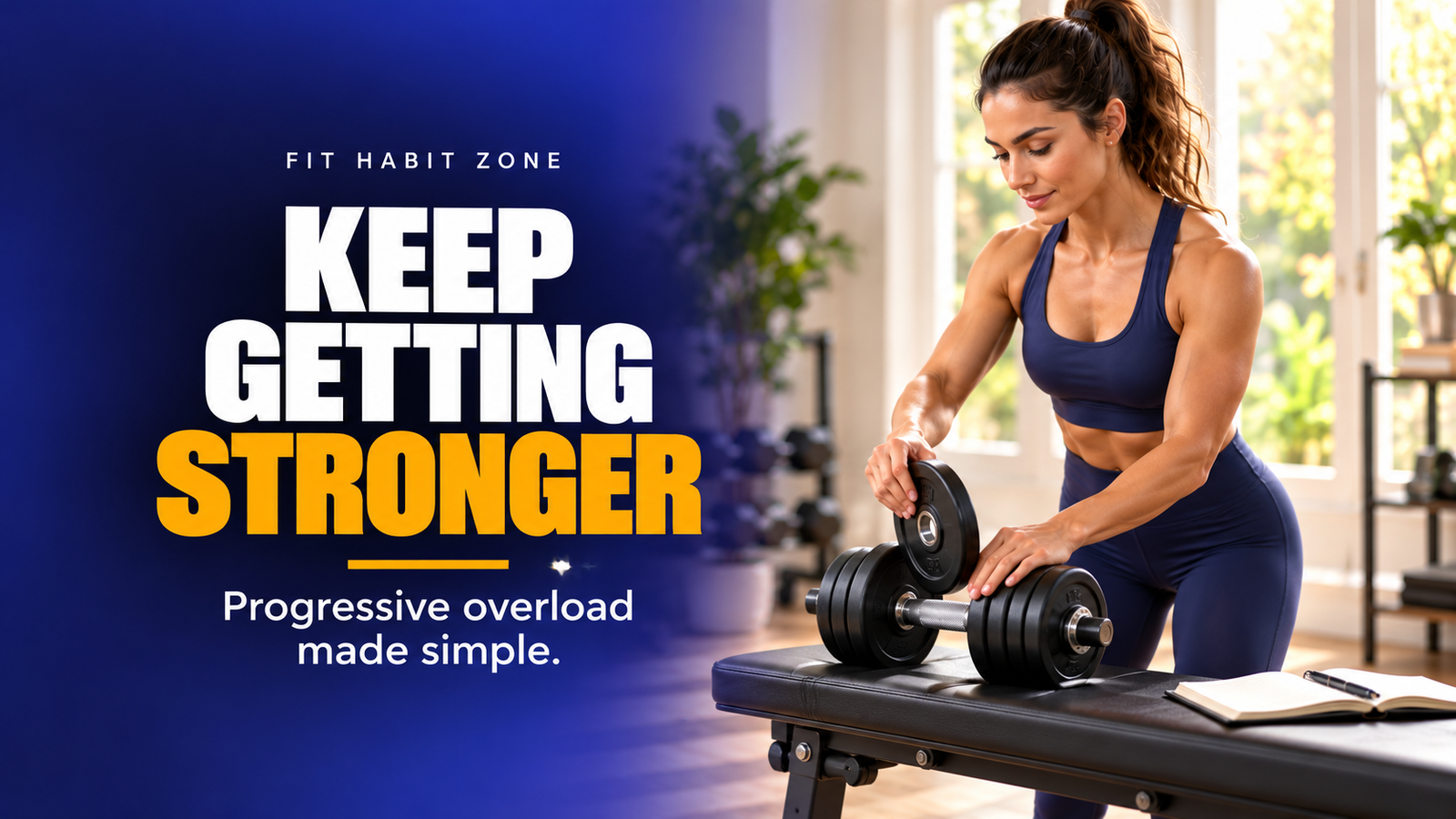
A single adjustable pair — or a couple of fixed pairs — solves the loading problem. Goblet squats, Romanian deadlifts, overhead presses, and rows hit every major muscle group with a load you can increase by five pounds at a time. That small, steady increase is what strength gains are made of: the same exercise, slightly heavier, week after week. Dumbbells also fix the pulling gap — a one-arm row does for your back what push-ups can't. And a pair of dumbbells lives quietly in the corner of a bedroom, silent enough for an apartment at any hour.
The Honest Downsides of Dumbbells
They cost money, and decent adjustable dumbbells aren't pocket change — expect something in the neighborhood of a month or two of a gym membership, and that's before a bench. Cheap plastic-coated sets wear out and rattle. You also need a bit of instruction: a sloppy dumbbell row done fast is a shoulder strain waiting to happen, and there's no mirror-and-trainer feedback at home unless you film yourself. None of this is disqualifying, but dumbbells ask for a small upfront investment of money and attention that bodyweight doesn't.
Cost, Space, and Noise: The Real-World Math
Bodyweight: $0, the space of a yoga mat, zero noise. Dumbbells: one adjustable set in the 5-to-52.5-pound range typically runs $200–$400, occupies about two square feet of floor, and makes almost no noise. A full fixed set is cheaper per pound but eats closet space fast. If you rent a small apartment with thin walls, bodyweight is the friendlier neighbor — no clanking, no dropped weights. If you've got a garage corner or a spare room, the footprint of dumbbells is trivial for what they add.
So Who Should Pick Which?
Pick bodyweight if money is tight right now, your living space is genuinely tiny, or you travel a lot — it's the routine that survives hotel rooms and busy weeks. Pick dumbbells if you want the simplest path to measurable progress over a year, you can afford a mid-range adjustable set, and you have even a small corner to train in. If your main goal is general fitness and feeling good, both will get you there. If you specifically want to build visible muscle, dumbbells have the edge over time, because progressive overload is simply easier with weights.
Why Not Start With Both?
The most practical beginner plan is a hybrid, and it costs nothing extra if you already own dumbbells — or nothing at all while you save up. Use bodyweight for warm-ups, core work, and conditioning: push-ups, bodyweight squats, planks, and glute bridges cover a lot. Use dumbbells for the loaded basics: goblet squats, rows, floor presses, and Romanian deadlifts. A simple rhythm of three 30-minute sessions a week — alternating an upper-body day and a lower-body day with one full-body day — gives you months of productive training without a single gym trip.
The Bottom Line
Dumbbells and bodyweight aren't rivals — they're two ways to answer the same question, which is how to challenge your muscles a little more than last week. Bodyweight wins on cost, space, and simplicity; dumbbells win on easy progression and balance across muscle groups. The wrong choice is the one you won't stick with. Pick the option that fits your life this month, train three times a week for two months, and reassess. The beginner who keeps going always beats the one who optimized their equipment list.
This article is for general information only and isn't medical advice. If you have a health condition or injury, check with a qualified healthcare professional before starting a new exercise routine.