
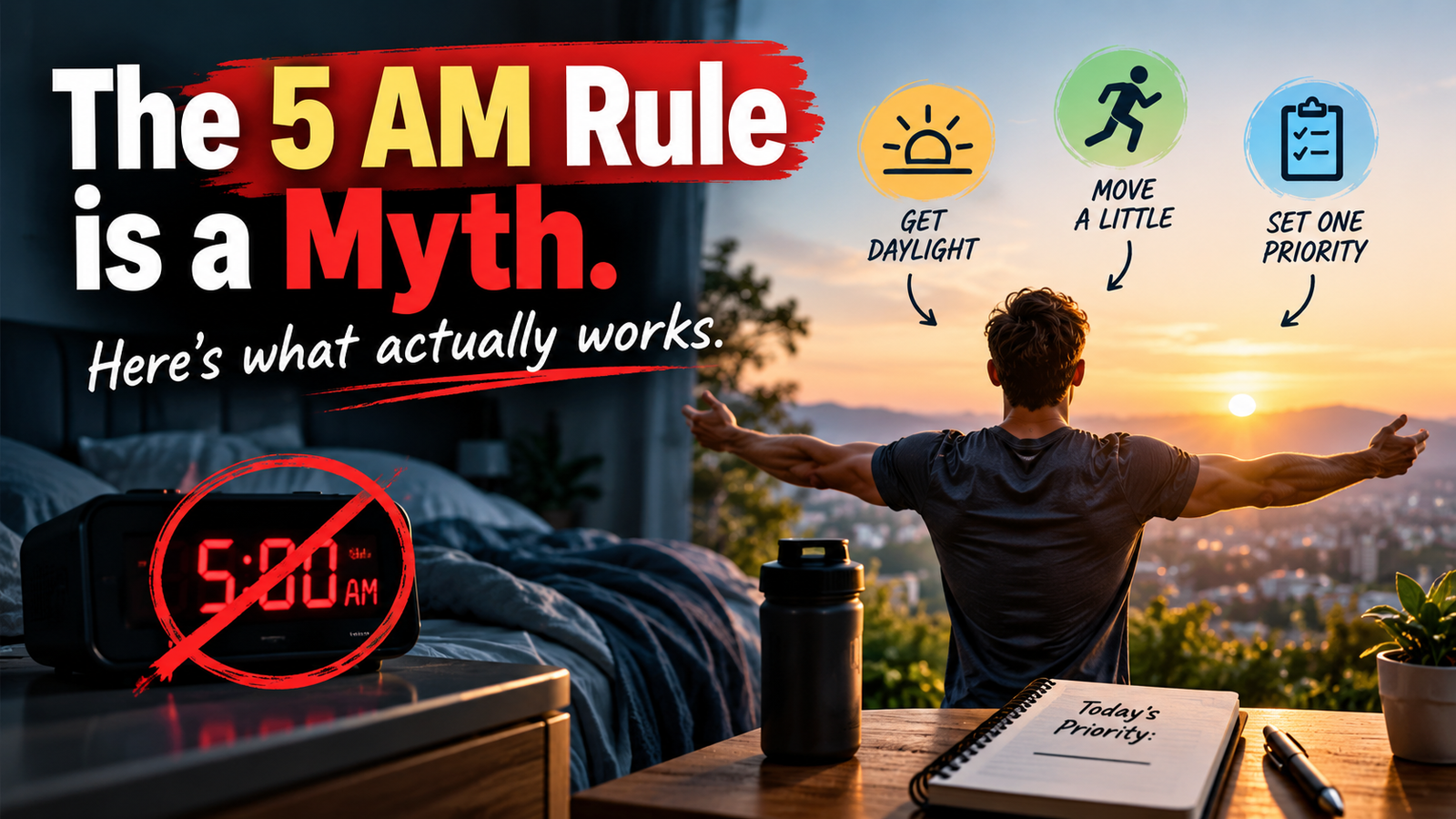
Somewhere along the way, mornings turned into a competition. Wake at 5 AM, meditate, journal, work out, read ten pages, and drink something green — all before the rest of the world opens its eyes. Miss any of it and you're already behind.
Here's the truth nobody selling a morning routine wants to admit: the hour doesn't matter nearly as much as what you do with it. Plenty of productive, healthy people wake at 7:30. Plenty of 5 AM risers spend their first hour scrolling in bed. What matters is whether your mornings are intentional — not what time they start.
So let's drop the 5 AM rule and build something better: a morning routine that fits your actual life and survives your worst days.
Why the 5 AM rule became gospel
The idea took off because it's simple and sounds disciplined. A few high-profile CEOs mentioned early rising, and an entire industry of books and courses grew around it. Early mornings do have real advantages — fewer interruptions, quiet time before demands pile up — but those benefits come from the quiet, not the hour. A 6:30 AM start with no distractions beats a 5 AM start spent answering emails.
The deeper problem: advice built around someone else's schedule ignores your chronotype, your job, your kids, and your energy patterns. A routine you can't sustain for more than two weeks isn't a routine. It's a guilt machine.
What actually matters: intention, not the hour
Ask yourself what a good morning is supposed to do for you. For most people, the honest answer is some version of: start the day feeling like I'm in charge of it, not chasing it.
That feeling doesn't come from an alarm time. It comes from three things:
- A clear transition from sleep to wakefulness (your body needs signals).
- A little movement to shake off the grogginess.
- One decision made on purpose before the world starts making decisions for you.
Everything else — the journaling, the cold showers, the elaborate breakfasts — is optional seasoning. Nail the three basics first.
Know your chronotype (and stop fighting it)
Some people genuinely spring out of bed at dawn. Others don't fully come online until mid-morning, no matter how early they rise. That's largely biology, not character. Night owls forced into a 5 AM schedule often end up sleep-deprived, which tanks exactly the focus and energy the routine was supposed to create.
Instead of picking a wake time from a book, run a one-week experiment: for seven days, note when you naturally feel alert and when you fade. Then set your wake time to give yourself enough sleep (most adults need seven to nine hours) plus a calm 20 to 30 minutes before your day has to start. Protect that window. That's your routine's foundation.
The three non-negotiables
Keep it to three. If your routine needs a checklist app, it's too complicated.
1. Daylight within an hour of waking. Step outside, open the blinds wide, or sit near a bright window. Morning light is the strongest signal to your brain that the day has started, and it steadies your sleep cycle for the night ahead. Five to ten minutes is enough.
2. Ten minutes of movement. Not a workout — movement. A short walk, some bodyweight squats and stretches, a few flights of stairs. The goal is to raise your heart rate slightly and loosen up, not to exhaust yourself before breakfast.
3. One clear priority before your phone. Before email, news, or social media, decide the single most important thing today and write it down. One sentence. This takes ninety seconds and it's the highest-leverage habit on this list — it means you start the day with a plan instead of reacting to other people's.
What to skip (for now)
Ice baths, hour-long journaling sessions, elaborate supplement stacks, forty-minute meditations — none of these are bad, but they're advanced moves. Stacking five new habits at once is the fastest way to quit all of them by Thursday.
Master the three non-negotiables for two to three weeks first. Once they feel automatic, add one thing. Just one. The people with impressive routines didn't build them in a weekend; they layered them over months.
Build the smallest routine that survives your worst day
Here's the test most routines fail: can you do it when you're tired, running late, and everything's going wrong? If not, it's a fair-weather routine, and fair-weather routines don't change anything.
Design a minimum version of each habit:
- Bad-day daylight: stand by the brightest window for two minutes while the coffee brews.
- Bad-day movement: twenty bodyweight squats and a hallway stretch.
- Bad-day priority: one sentence in a notes app.
On good days you'll do more. On bad days you'll still show up. Consistency at 70 percent beats perfection at 20 percent, every time.
A sample 20-minute routine
For reference, here's what the whole thing can look like:
- 0:00–0:05 — Out of bed, water, open the blinds or step outside.
- 0:05–0:15 — Ten minutes of movement (walk, stretch, bodyweight circuit).
- 0:15–0:20 — Write down today's one priority; glance at the calendar.
That's it. Twenty minutes, no equipment, no apps, no 5 AM required.
The bottom line
The best morning routine isn't the most impressive one — it's the one you'll still be doing in six months. Forget the hour. Get some light, move a little, decide one thing on purpose, and make it small enough to survive a bad day. Do that consistently and the "myth" stops mattering entirely.
This article is for general information only and isn't medical advice. If you have a sleep disorder or a health condition that affects your mornings, check in with a qualified healthcare professional.