You don't need a gym to get stronger
Twenty minutes, a little floor space, and your own body weight are enough for a workout that builds real strength — if you do it right. No commute, no membership, no equipment to buy. Here's the exact routine, how to do each move well, and how to keep progressing without ever leaving your living room.
What you'll need
Nothing you don't already have. Clear roughly a yoga mat's worth of floor space, wear whatever you can move in, and keep water nearby. Shoes are optional — plenty of people train barefoot at home. If your floor is hard, a towel or mat under your knees makes floor work more comfortable.
Warm up first (2 minutes)
Don't skip this. Cold muscles and stiff joints are how home workouts end in pulled muscles. Two minutes is enough:
- March in place — 30 seconds, swing your arms, lift your knees.
- Arm circles — 15 seconds forward, 15 seconds back.
- Leg swings — hold a wall, 10 gentle swings per leg.
- Hip circles — 10 each direction, hands on hips.
You should feel warm and a little loose, not tired.
The workout: 6 moves, 20 minutes
Do each exercise for 40 seconds, rest 20 seconds, then move to the next. That's one round (6 minutes). Rest one minute between rounds. Do 2 rounds as a beginner, 3 when it starts feeling easy. Total: about 20 minutes including the warm-up.
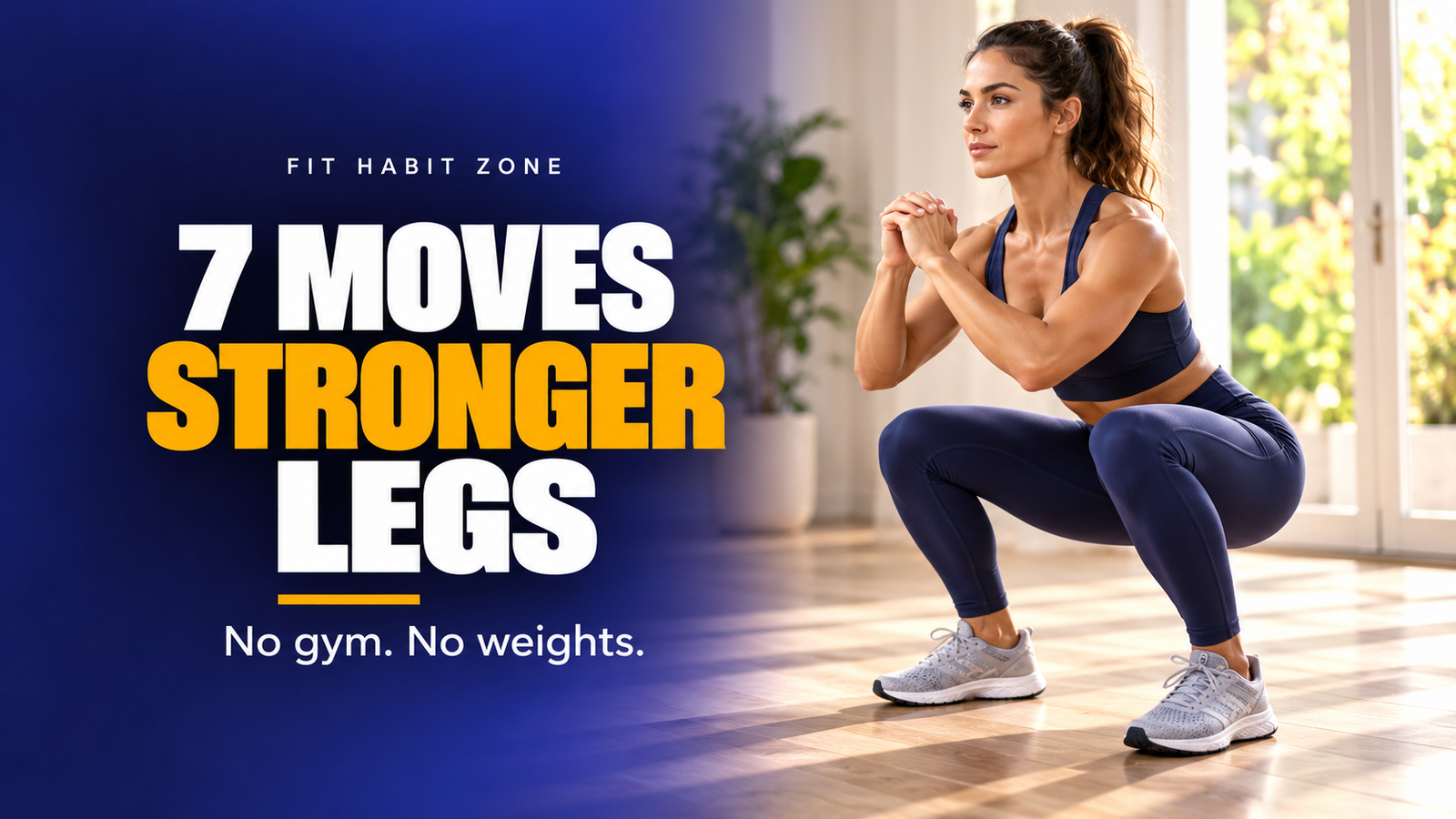
1. Bodyweight squats
Stand with feet shoulder-width apart, toes slightly out. Push your hips back and bend your knees like you're sitting into a chair. Keep your chest up and your weight in your heels. Go as low as you comfortably can, then drive back up. Cue: knees track over your toes — don't let them cave inward.
2. Push-ups
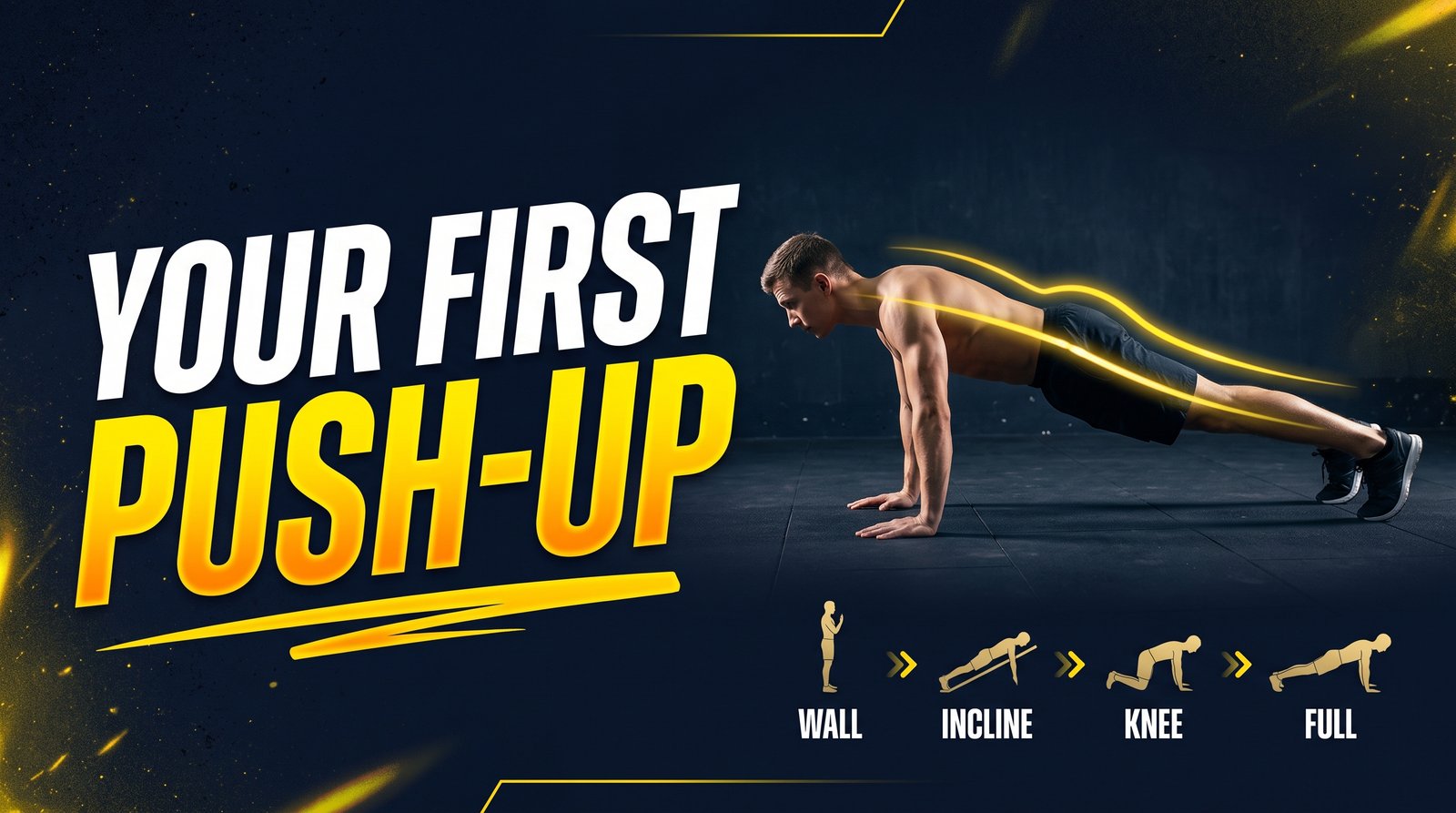
Hands under your shoulders, body in a straight line from head to heels. Lower your chest toward the floor, then push back up. Too hard? Do them from your knees, or with hands on a sturdy chair or countertop. Too easy? Slow down — take 3 seconds to lower yourself. Cue: squeeze your glutes; a sagging lower back means your core checked out.
3. Glute bridges
Lie on your back, knees bent, feet flat and hip-width apart. Push through your heels and lift your hips until your body forms a straight line from shoulders to knees. Pause one second at the top, lower slowly. This one wakes up the glutes most desk workers have forgotten they own.
4. Reverse lunges (alternating)
Stand tall, step one foot back, and lower until both knees are bent near 90 degrees. Push through your front heel to return. Alternate legs each rep. Reverse lunges are kinder on knees than forward lunges and easier to balance. Cue: keep your torso upright — no leaning forward.
5. Plank
Forearms on the floor, elbows under shoulders, body straight from head to heels. Brace your core like someone's about to poke your stomach. Hold — don't hold your breath. Too hard? Drop to your knees. Cue: if your hips sag or pike up, the set is over. Quality beats seconds.
6. Mountain climbers
From a push-up position, drive one knee toward your chest, then switch — like running in place horizontally. Keep your hips level. Beginner option: slow it down or march in place standing. This is your finisher; it should elevate your heart rate.
How to progress week to week
Your body adapts fast, so the workout has to evolve. Pick one progression at a time:
- Add a third round when two rounds stop challenging you.
- Slow the tempo — 3 seconds down on squats and push-ups makes the same move much harder.
- Shorten rests from 20 seconds to 15, then 10.
- Upgrade the variation: knee push-ups to full, glute bridges to single-leg.
Track what you do. A note on your phone — rounds completed, how it felt — is enough. Progress you can see is motivation you don't have to manufacture.
How often should you do it?
Three times a week is the sweet spot for beginners, with at least one rest day between sessions. Muscles get stronger during recovery, not during the workout. On off days, a 20–30 minute walk keeps you moving without interfering with recovery.
Mistakes that stall beginners
- Going all-out on day one. Being unable to walk for three days isn't a badge of honor — it's a reason people quit. Start at 2 rounds.
- Rushing the moves. Fast, sloppy reps train nothing but momentum. Controlled reps build strength.
- Holding your breath. Exhale on the effort (pushing up, standing up), inhale on the way down.
- Program-hopping. Do this routine for 4–6 weeks before judging it. Consistency beats novelty.
The bottom line
The best workout is the one you'll actually do, and removing every barrier — no drive, no fees, no equipment — makes "I'll skip today" a much harder excuse to sell yourself. Twenty minutes, three times a week, in your living room. Start with two rounds today.
This article is for general information only and isn't medical advice. If you have a health condition or injury, check with a qualified healthcare professional before starting a new exercise routine.
This is the ongoing routine to graduate to after your first two weeks of getting started.