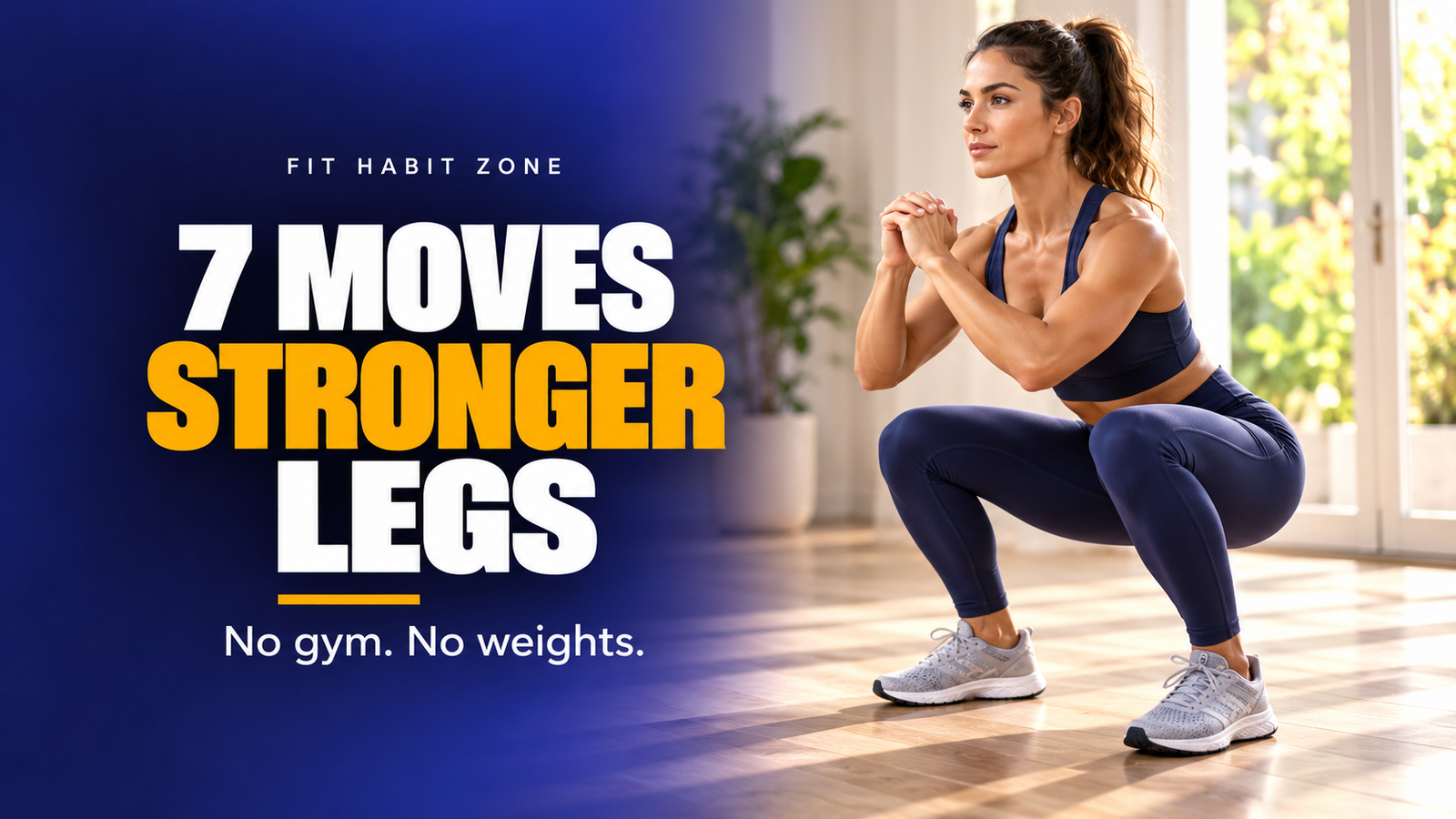
Here is the short answer: yes, you can build genuinely stronger legs with no equipment at all. Seven bodyweight moves cover every pattern your legs need — squatting, lunging, hinging, and single-leg balance — and done two or three times a week, they will make stairs easier, your knees steadier, and standing up from a low chair noticeably less effortful. No gym membership required, and no weights to buy.
Legs respond well to bodyweight training because the muscles are large and you carry your own resistance everywhere. The trick is picking the right few moves, doing them with good form, and progressing them over weeks instead of repeating the same easy version forever.
The 7 moves
1. Bodyweight squat. Stand with feet about shoulder-width apart, toes slightly out. Sit your hips back and down as if lowering into a chair, keeping your chest up and your knees tracking in line with your toes. Go as low as you can with heels down and back flat, then drive up through your whole foot. This is the foundation move for quads, glutes, and core stability. If you are new to squatting, our beginner strength-training guide breaks down squat form cue by cue.
2. Reverse lunge. Stand tall, step one foot back, and lower your back knee toward the floor until both knees are roughly at right angles. Push through your front heel to return. Reverse lunges are kinder on the knees than forward lunges because your front foot stays planted. Keep your torso upright rather than leaning forward over your front leg.
3. Glute bridge. Lie on your back, knees bent, feet flat and close enough that you can nearly touch your heels with your fingertips. Press through your heels, lift your hips until your body forms a straight line from shoulders to knees, squeeze at the top for a second, then lower slowly. This is the best no-equipment move for waking up glutes that spend all day sitting in a chair.
4. Bulgarian split squat. Stand in front of a sturdy chair, rest the top of your back foot on it, and lower straight down until your front thigh is close to parallel with the floor. This single-leg move builds strength and balance two-legged exercises miss. Hold a wall or chair for balance at first — there is no penalty for using support while you learn the pattern.
5. Romanian deadlift (bodyweight hinge). Stand tall, feet hip-width apart, knees slightly bent. Push your hips straight back, torso tipping forward with a flat back, until you feel a stretch in your hamstrings — usually around mid-shin height. Squeeze your glutes to stand. This hip-hinge pattern is what protects your lower back when you pick things up in real life.
6. Wall sit. Slide your back down a wall until your thighs are roughly parallel to the floor, knees above ankles, and hold. Wall sits build quad endurance and teach you to stay calm under effort, which transfers directly to hiking and long days on your feet.
7. Standing calf raise. Stand near a wall for balance, rise onto the balls of your feet as high as you can, pause a second at the top, and take a full three seconds on the way down. Calves keep your ankles stable and your stride springy. Doing them one leg at a time doubles the challenge when two legs get easy.
The workout: sets, reps, and rounds
Warm up for three to five minutes first — march in place, swing your legs gently front to back and side to side, and do ten easy half-squats. Then work through the seven moves in order, resting about 30 seconds between moves and 60 to 90 seconds between rounds:
- Bodyweight squat: 12–15 reps
- Reverse lunge: 10 reps per side
- Glute bridge: 15 reps, with a one-second squeeze at the top
- Bulgarian split squat: 8 reps per side
- Romanian deadlift: 12 reps, slow and controlled
- Wall sit: 30–45 seconds
- Standing calf raise: 15–20 reps
Do two rounds if you are starting out, three once two feels comfortable. The whole session takes about 30 to 40 minutes including the warm-up. Aim for two or three leg sessions per week, on days that are not back to back, and pair this with upper-body or cardio work on the other days — our 20-minute no-equipment home workout makes a good alternate-day session.
How to make it harder without weights
Bodyweight training stops working only when you stop progressing it. Slow the lowering phase to three or four seconds, add a two-second pause at the bottom of squats and split squats, or add reps until you can do 20 clean ones — then move to a harder version: squats become split squats, two-leg calf raises become one-leg calf raises. You can also add a fourth round or shorten rest between rounds. Change one variable at a time so you can tell what is driving progress.
Note the rounds, reps, and variation you used; when last week's hard set feels routine, move one rung up the ladder.
Common mistakes to avoid
Knees caving inward on squats and lunges. Think about pushing your knees gently outward, in line with your second toe. If they collapse every rep, drop the reps and rebuild the pattern.
Rushing the hinge. The Romanian deadlift is not a toe-touch. If your back rounds or you feel it in your lower back instead of your hamstrings, you are going too low or moving too fast. Shorten the range and keep your back flat.
Skipping the warm-up. Cold muscles and stiff hips make form harder to hold. Five minutes of easy movement is not optional, especially in the morning.
Training legs every day. Legs need a day to recover between hard sessions. Planned recovery is part of getting stronger, not a break from it — our guide to rest days explains why spacing sessions out actually speeds up progress.
The bottom line
You do not need a squat rack to build legs that carry you well through daily life. Seven moves, two or three sessions a week, good form, and steady progression beat a drawer full of equipment you never use. Start with two rounds, learn the hinge, and give it four weeks. Your stairs will tell you before your mirror does.
This article is for general information only and isn't medical advice. If you have a health condition or injury, check with a qualified healthcare professional before starting a new exercise routine.