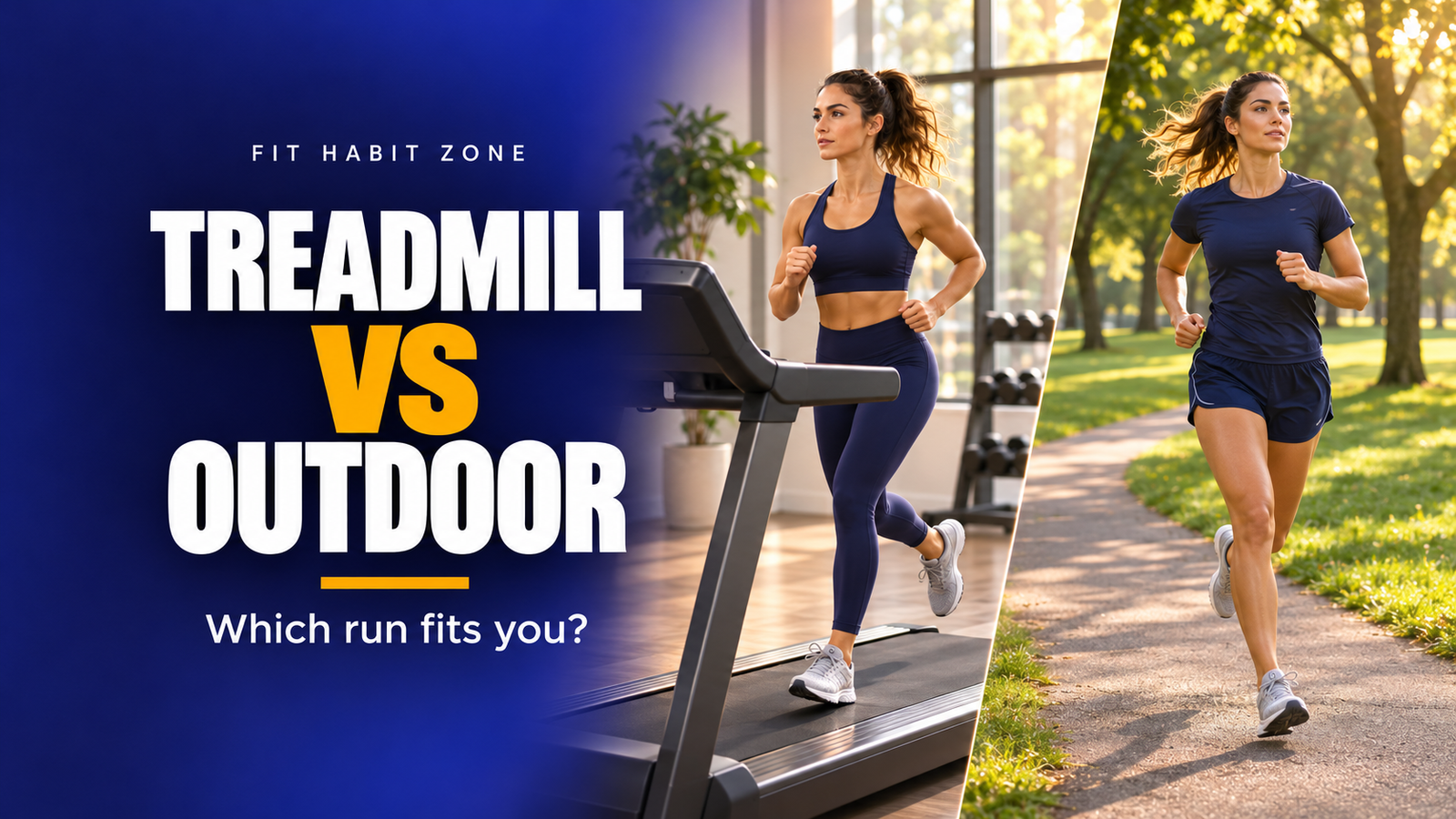
Here is the short answer: neither one is better, and anyone who tells you otherwise is probably selling one of them. A treadmill and the road are the same basic activity on two different surfaces, and the right choice depends on your knees, your schedule, your budget, and how much you actually enjoy running in the rain. What matters most is not where you run but whether you keep running.
That said, the two are not identical. Here is how they really compare, one factor at a time.
The Joint Impact Question
This is the claim you hear most often: treadmills are easier on your joints. There is some truth in it, but less than the marketing suggests. A treadmill belt has a bit of give, which changes how your foot strikes and pushes off. Many runners with sore knees or shin splints find the belt more forgiving than concrete, and for someone coming back from an injury, that softer, even surface can be the difference between running and not running.
Outdoor surfaces vary a lot more, though. Concrete sidewalks are the hardest common option and the least forgiving. Asphalt roads are slightly softer. Packed dirt trails, grass, and tracks are the kindest of all. So "outdoor running" is not one thing — a run on a wooded trail and a run on a city sidewalk are very different experiences for your legs. If joint comfort is your main worry, the honest ranking runs from treadmill and soft trails at the gentle end to concrete at the harsh end.
One nuance: the treadmill's even surface can also be a weakness. Your body never adjusts to a camber, a curb, or uneven ground, so the small stabilizing muscles around your ankles and hips get less work. Mix in some outdoor time if you can.
Convenience and Consistency
This is where the treadmill usually wins, and it is not close. You can run at 5 AM or 11 PM, in a thunderstorm or a heat wave, while your kids nap in the next room. No route to plan, no weather excuse. A run you actually do beats a perfect run you skip.
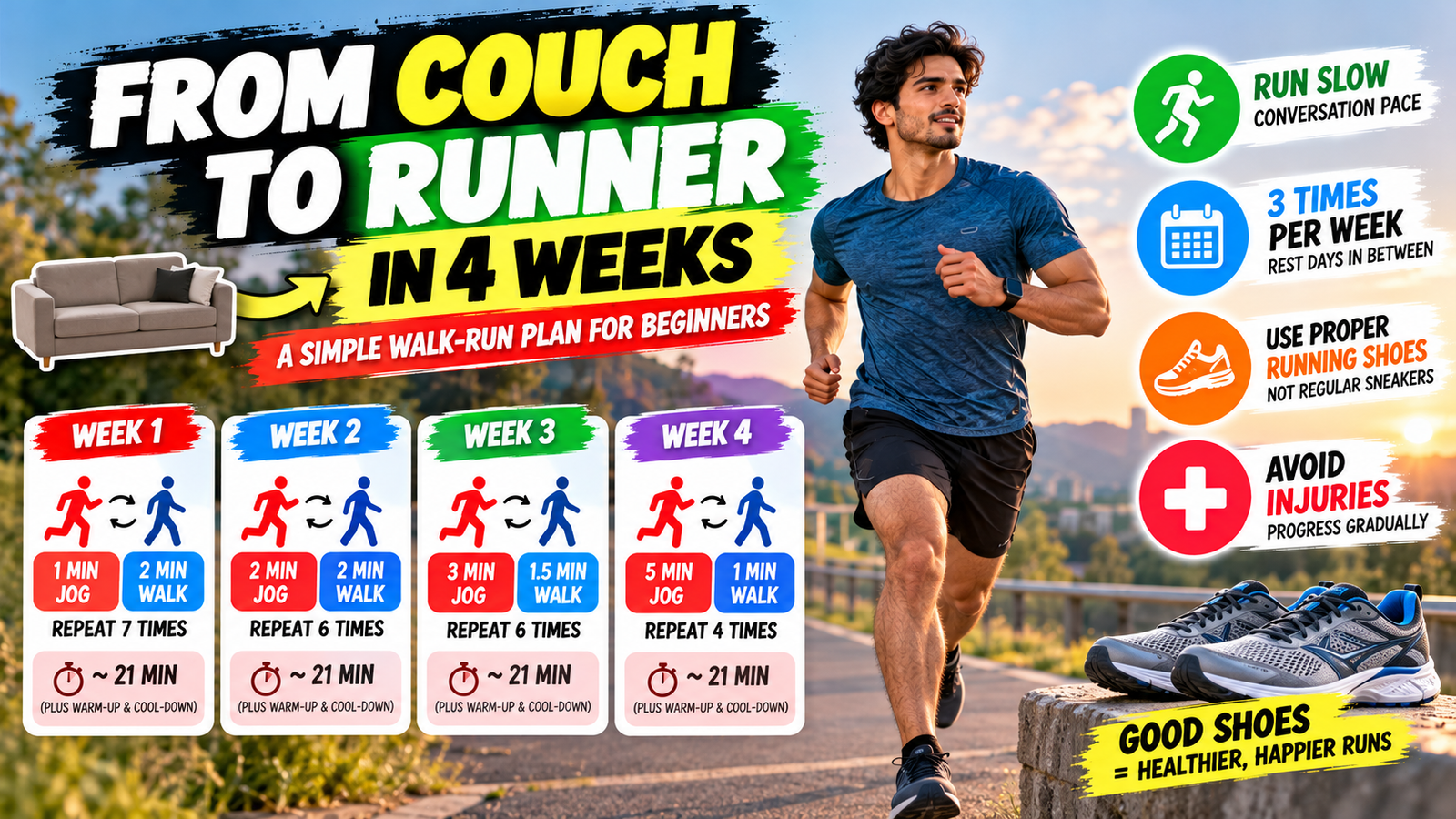
The treadmill also gives you precise control. You set the pace, and it stays set. That is genuinely useful for intervals, tempo runs, and the gradual walk-run progression in our couch-to-running plan, which is easier to follow when the machine holds you to the plan.
Outdoor running has its own convenience: no machine to buy, maintain, or find space for. You step out the door and you are running. The trade-off is the small decisions every run demands — route, traffic, weather — any of which can become the reason you stayed home.
Weather, Safety, and Boredom
Weather is the treadmill's strongest argument. Extreme heat is a real risk for runners, and cold, icy sidewalks are a genuine hazard. Running indoors removes both problems. If you live somewhere with harsh winters or brutal summers, a treadmill is not a luxury — it is what keeps you running year-round.
Then there is the part nobody measures: fresh air, changing scenery, and the simple pleasure of being outside. Plenty of runners find outdoor miles feel shorter than treadmill miles at the same pace, because there is something to look at. Boredom is the treadmill's quiet enemy. Music and podcasts help, but staring at a wall for forty minutes is a test of willpower that a trail run never asks you to pass.
Cost: The Number Nobody Wants to Do
Outdoor running is nearly free. A decent pair of running shoes is the main expense, and shoes need replacing every few hundred miles no matter where you run. Beyond that, the road costs nothing.
A treadmill is a different story. A home machine that can handle regular running — not just walking — is a serious purchase, and cheap models tend to break under real running mileage. A gym membership may be cheaper for years if you run three times a week; if you run daily and hate gyms, a home machine can pay for itself. What rarely pays off is buying an expensive treadmill that becomes a clothes rack by February.
What Each One Does Better
Treadmills are better for controlled training: intervals, hill work on a set incline, bad-weather running, and sessions where pace and surface must stay constant. They are also better for beginners still learning what a comfortable pace feels like, since the display tells you exactly what you are doing.
Outdoors is better for building real-world running skill: pacing by feel, handling hills and wind, strengthening stabilizer muscles on varied ground, and preparing for a race, which will never take place on a belt. If you have a race goal, some outdoor running is not optional — it is the rehearsal. That is why our beginner 8-week 5K plan mixes both: the structure is easier to learn indoors, but race day happens outside.
There is also a middle path most runners land on without planning it: treadmill in winter or on busy weekdays, outdoors on weekends when time and weather allow. That combination is not a compromise — it is probably the most practical setup there is.
Who Should Choose Which
Choose the treadmill first if your knees or shins complain on hard surfaces, if your schedule only allows odd hours, if local weather regularly cancels outdoor plans, or if you are just starting out and want pace control while you learn. None of those are weaknesses — they are practical reasons.
Choose outdoors first if you love being outside, if you are training for a race, if cost matters, or if you find treadmill running so dull that you keep quitting. A run you enjoy is one you will repeat.
And whichever you choose, the basics still apply. Warm up before you push the pace, build distance gradually, and pay attention to your breathing — our guide to breathing properly while you exercise covers the rhythm that keeps beginners from gasping through the first mile. Surface choice will not save you from doing too much too soon; patience will.
So stop worrying about which camp you belong to. Run on the treadmill when it makes sense, run outside when it feels good, and mix the two whenever you can. The best running surface is the one under your feet on the days you actually run.
This article is for general information only and isn't medical advice. If you have a health condition or injury, check with a qualified healthcare professional before starting a new exercise routine.