
What a Plateau Actually Is (and Isn't)
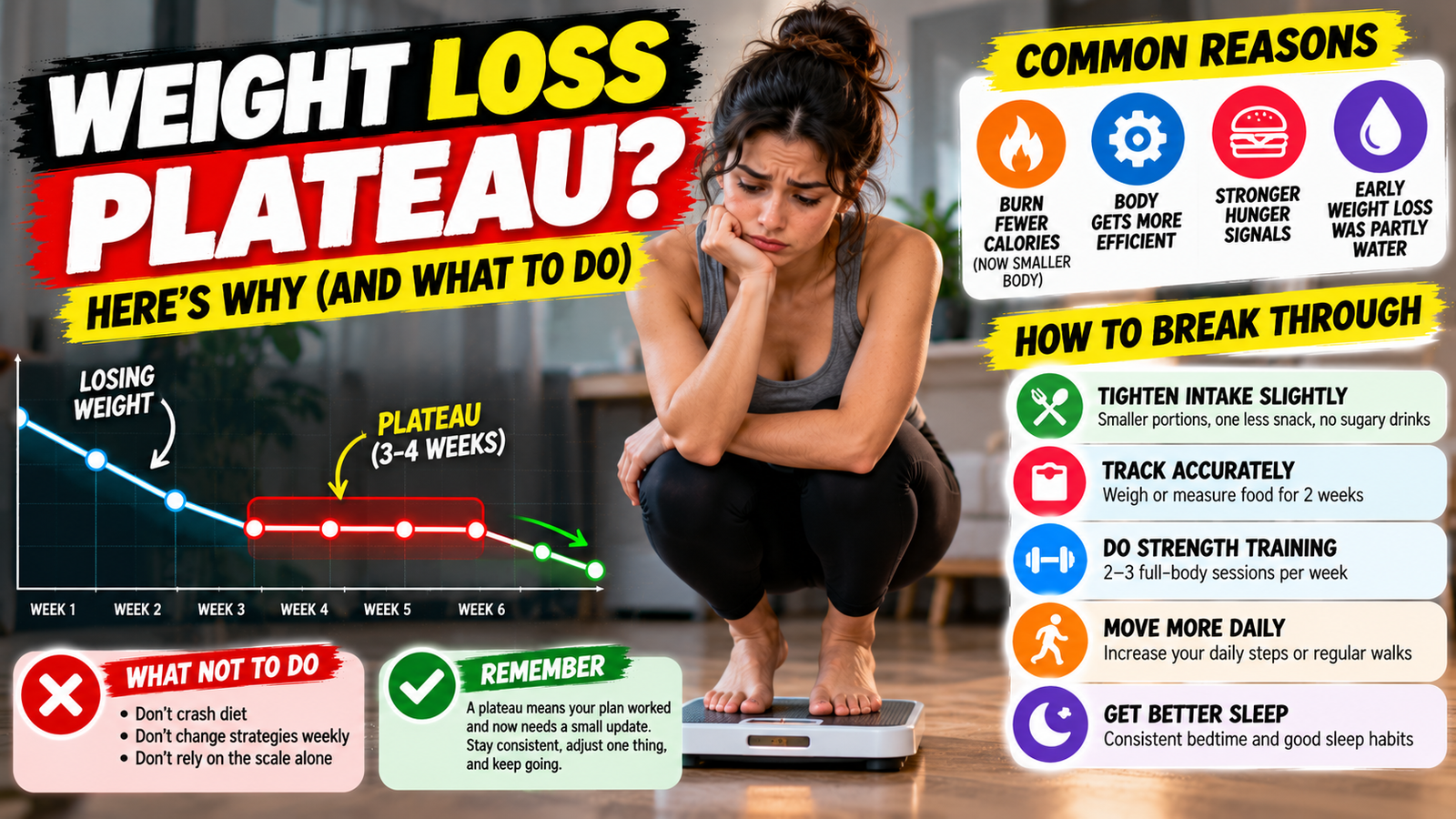
A real plateau is your weight staying roughly the same for three to four weeks or longer while you are genuinely consistent with your eating and activity. That is the definition worth using — and the one that matters.
Two weeks of flat weight is not a plateau — it is normal noise. Weight fluctuates day to day from water, salt intake, workouts, and hormonal cycles. Before you "fix" anything, make sure there is actually something to fix.
Why Plateaus Happen
A smaller body burns less energy. This is the biggest, simplest reason. Moving a 200-pound body takes more fuel than moving a 170-pound body. The diet and workout routine that created a deficit at your starting weight may barely create one now — or none at all. The math of your plan changed because you changed.
Your body gets more efficient. When you eat less for a long time, your body adapts by becoming thrifty: it runs a little cooler and you move less without realizing it — less fidgeting, fewer spontaneous steps. This quiet energy conservation is a feature of being alive, not a malfunction.
Hunger pushes back. As fat stores decrease, hunger signals tend to get louder while fullness signals get quieter. This is not weak willpower — it is the system working as it evolved to. Your plan has to account for it, especially with high-volume, high-protein meals that keep you satisfied.
Early progress was partly water. Many people lose weight quickly in the first week or two, then feel discouraged when the pace slows. Much of early loss is stored carbohydrate and the water held with it, which flushes out fast — the real pace was always going to be slower than week one.
First: Make Sure It Isn't Something Else
Before changing your plan, run through this honesty check. Plateaus that turn out not to be plateaus usually come from one of these:
- Weekend eating. Sticking to your plan Monday through Friday and eating freely on weekends can quietly erase the week's entire deficit. Five careful days plus two loose ones often nets out near zero.
- Drift in tracking. Portions creep up over time. The "tablespoon" of peanut butter becomes a heaping one. The handful of nuts gets bigger. If you stopped measuring months ago, your intake has probably risen without you noticing.
- Movement drift. Many people train hard three times a week but have gradually become more sedentary the rest of the time. Those small daily movements add up to real energy burn.
- New exercise inflammation. If you recently added strength training, your muscles hold extra water while they recover and adapt. The scale can stall for weeks while your body composition is actually improving.
Two weeks of truly consistent tracking and eating usually reveals which of these — if any — is the real culprit.
What to Adjust (One Thing at a Time)
The plateau-breaker rule: change one variable, give it two to three weeks, then assess. Changing everything at once teaches you nothing.
Tighten intake slightly. You do not need to slash your calories. Since your body is smaller now, a modest reduction — smaller portions, one less snack, dropping sugary drinks — may be enough to recreate the same gap.
Audit your tracking for two weeks. Weigh or measure food again, honestly, for a fortnight. Most people find the answer here. You are not looking for perfection; you are looking for the drift.
Add strength training. A couple of full-body strength sessions per week protect the muscle you have, which keeps your daily energy burn from dropping as far — and changes how you look and feel far more than the scale number does.
Raising daily movement beats adding cardio. If you already exercise, more intense workouts can backfire by increasing hunger and fatigue. Often the better move is a daily step target or a regular walk — low stress, low hunger, and it counteracts the body's tendency to get still.
Protect your sleep. Poor sleep makes everything about weight loss harder: hunger rises, cravings sharpen, and workouts suffer. You do not need a perfect eight hours. Aim for a consistent bedtime and wind-down routine.
What Not to Do
Do not slash your intake to extremes. Crash dieting to punish the scale spikes hunger, tanks energy, and is nearly impossible to sustain — the rebound almost always erases the progress it bought.
Do not jump between strategies weekly. Switching plans every few days means nothing gets time to work. Give each change at least two to three weeks before judging it.
Do not read the scale alone. Waist measurements, how your clothes fit, progress photos, and strength gains all tell the story the scale misses. Plenty of plateaus are only plateaus on the scale.
When to Talk to a Professional
Most plateaus are explained by the factors above. But if your weight has been stuck for months despite genuinely consistent habits — or you have symptoms like persistent fatigue or feeling cold all the time — talk to your doctor. Certain medications and conditions can affect weight, and only a qualified professional can assess that.
The Bottom Line
A plateau means your plan worked well enough to change your body — and now it needs a small update to match the new you. Check for tracking and movement drift, tighten things modestly, protect your sleep, and give each change time to show results. The people who break through plateaus are not the ones with the cleverest tricks. They are the ones who stayed calm, adjusted one thing, and kept going.
This article is for general information only and isn't medical advice. If you have a health condition or take medication, check with a qualified healthcare professional before making major changes to your diet.