Can you eat healthily on $75 a week? For one person, yes — and without living on plain rice. What $75 buys is real food cooked at home: oats, eggs, beans, chicken, frozen vegetables, and fruit that's in season. It won't cover organic everything or pre-cut convenience foods, but those were never the foods doing the heavy lifting. The trick is a short staples list, a few meals you can repeat without getting bored, and a firm rule about what stays out of the cart.
How the $75 breaks down
Think of the budget in buckets instead of one lump sum. A workable split for one person: about $20 on produce, about $22 on protein, about $15 on grains and pantry goods, about $10 on dairy and eggs, and the last $8 on flavor — salsa, spices, coffee, or whatever makes plain foods taste like food you want to eat. The buckets flex week to week, and no single one should quietly swallow the whole budget.
One honest caveat: the first week costs more than $75 if your pantry is empty. Cooking oil, spices, and rice last for weeks, so they hit the first shop hard and then barely show up again.
The staples list
These are the foods that carry the week — cheap per serving, long-keeping, and combinable into more meals than you'd expect:
- Oats — a large canister costs a few dollars and covers breakfast for two weeks.
- Eggs — one of the cheapest complete proteins available, and they work at any meal.
- Chicken thighs or drumsticks — cheaper than breasts, harder to dry out, better in leftovers.
- Canned beans and chickpeas — rinse them and they're ready; no soaking, no planning ahead.
- Lentils — dry lentils cost very little and cook in about 20 minutes.
- Brown rice — the base for bowls, stir-fries, and anything with beans.
- Frozen vegetables — broccoli, mixed vegetables, and peas don't wilt in your fridge by Thursday.
- Bananas, apples, and carrots — the cheapest fresh produce in most stores, week after week.
- Onions, potatoes, and canned tomatoes — the backbone of soups, curries, and sauces.
- Peanut butter and whole-wheat bread or tortillas — the fallback lunch when cooking doesn't happen.
Notice what's not on the list: protein powder, bottled smoothies, and specialty health foods. Eggs, beans, lentils, and chicken cover protein for far less — and our list of high-protein foods that aren't protein powder has more cheap options.
What to skip
The budget rarely gets blown by the big items. It leaks away on small ones that feel harmless one at a time. Pre-cut produce is the classic example — the same carrots, washed and sliced, can cost twice as much per pound. Single-serve snacks are another: a multipack of small bags costs far more per ounce than one large bag portioned at home. Bottled juice and smoothies look healthy but are mostly sugar water at a premium price; eating the actual fruit is cheaper and keeps you full longer.
Brand loyalty is the quietest leak of all. Store-brand oats, beans, rice, and canned tomatoes are usually made in the same facilities as the name brands, and the savings add up across a whole cart. Bulk deals on fresh food deserve the same skepticism: a giant bag of salad greens is only a bargain if you eat it before it turns to soup. If a package makes a bold health claim, flip it over before it goes in the cart; our guide to reading nutrition labels explains the three numbers that matter most.
A sample cart that covers the week
Here is what one $75 shop can look like, using typical U.S. supermarket prices. Prices vary by store and region, so treat these as a guide, not a receipt:
- Oats, 42 oz canister — $4
- Eggs, 18-count — $5
- Chicken thighs, 3 lb — $9
- Canned black beans, 4 cans — $4
- Lentils, 1 lb dry — $2
- Brown rice, 2 lb — $3
- Frozen broccoli and mixed vegetables, 2 bags — $5
- Bananas, 1 bunch — $1
- Apples, 3 lb bag — $4
- Carrots, 2 lb — $2
- Onions and a 5 lb bag of potatoes — $4
- Canned tomatoes, 2 cans — $3
- Peanut butter — $4
- Whole-wheat bread — $3
- Tortillas — $3
- Salsa or hot sauce — $3
- Milk or store-brand oat milk, half gallon — $3
- Cheese, small block — $4
- Spinach or salad greens, 1 bag — $3
- Coffee or tea — $4
That adds up to about $73, leaving a couple of dollars for tax or a small treat.
Turning the cart into a week of meals
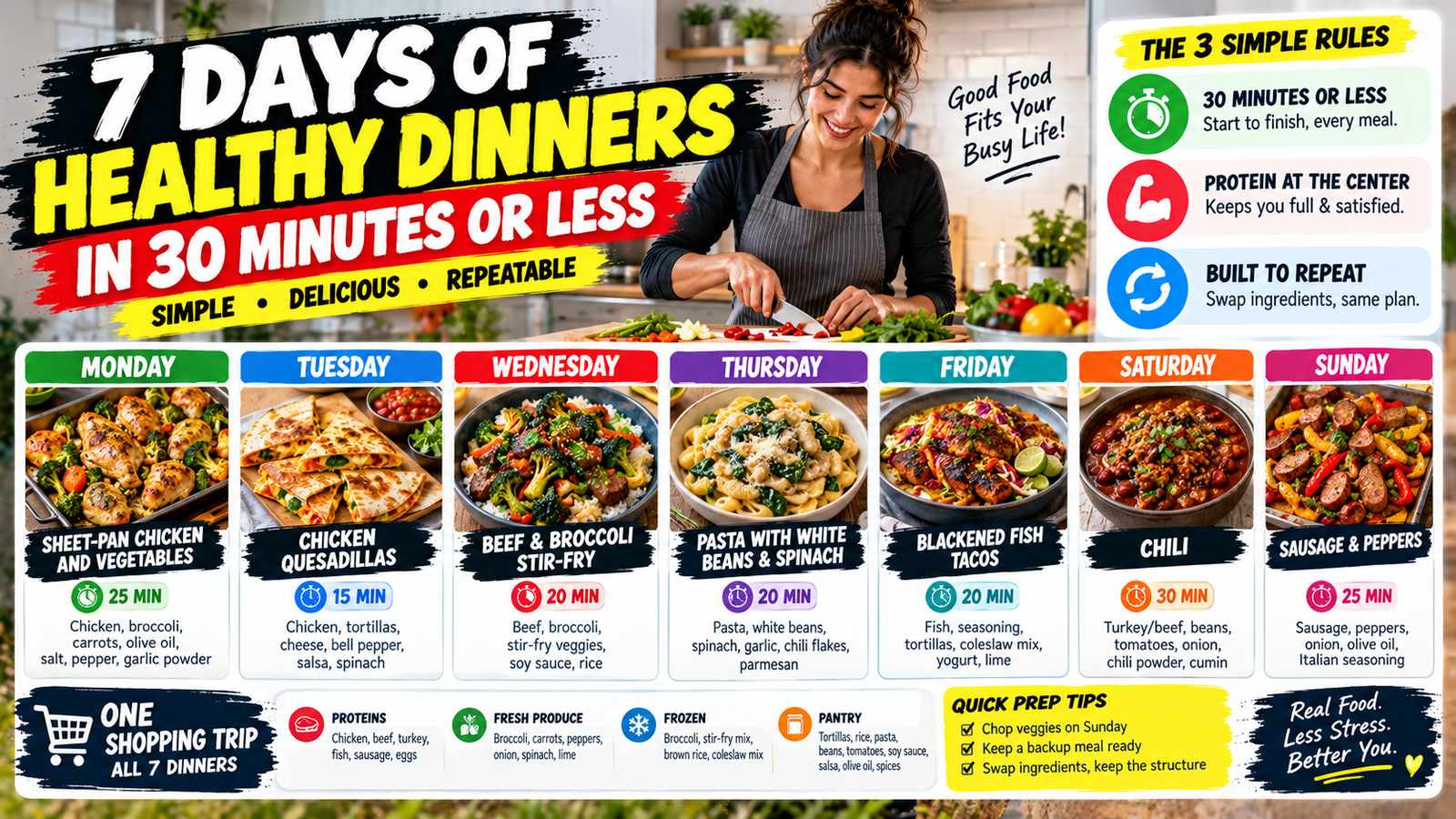
Breakfast is the easiest meal to lock down: oats with banana and peanut butter, or eggs on toast with fruit. Both cost well under a dollar per serving. Lunch can be a bean and rice bowl, a chicken and vegetable wrap, or last night's leftovers. Dinner is where the cart earns its keep: chicken thighs with roasted potatoes and broccoli one night, lentil soup with bread the next, bean tacos after that, and a stir-fry of frozen vegetables over rice whenever energy runs low.
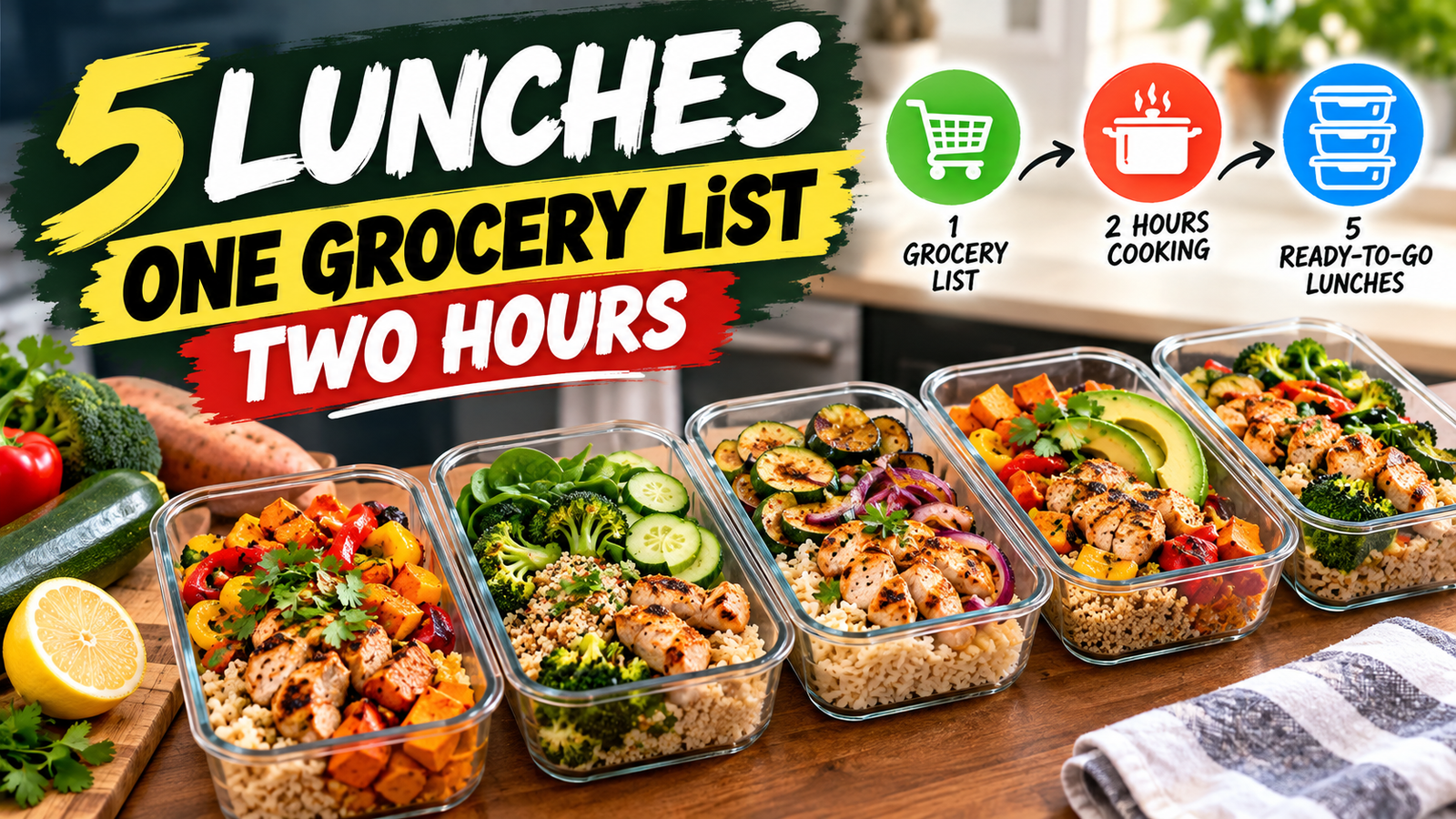
If cooking every night sounds like a lot, it doesn't have to be. Our beginner meal-prep guide shows how one two-hour session can cover five days of lunches — and the same idea works for dinners: cook a double batch and tomorrow's meal is already done.
Five habits that keep you under $75
- Build the list from meals, not cravings. Pick five or six dinners first, then list only what those meals need.
- Eat before you shop. A hungry shopper buys snacks; a fed shopper buys the list.
- Compare unit prices, not sticker prices. The shelf tag shows price per ounce — the bigger bag is not always cheaper.
- Let frozen produce do the heavy lifting. Frozen vegetables cost less, last longer, and waste nothing.
- Shop once big, once small. One main shop for the week, plus one short midweek top-up for greens and bread, beats five unplanned trips.
Seventy-five dollars doesn't buy a perfect diet. It buys a good one: real ingredients, home cooking, and enough variety to stick with. Start with the staples list, skip the traps, and use the sample cart as your first week's template — then adjust it to what you actually like eating, because the cheapest meal plan is the one you'll repeat.
This article is for general information only and isn't medical advice. If you have a health condition or dietary restriction, check with a qualified healthcare professional before changing how you eat.